OSSA
Bringing the collection into the light…
Bringing the collection into the light…
A cast, never a fossil.
The form can belong to you.
Editioned Natural-History Sculpture · Commissioned & Installed
A real Triceratops skull sold at Sotheby’s for $661,500. In July 2026, “Gus” — a Tyrannosaurus — sold for $50.1 million.
Those bones now sit behind glass in a freeport or a foundation, seen by almost no one. OSSA exists for the other possibility: the same museum specimens, cast to the millimetre in the atelier, hand-finished, and installed in your own space — the apex predator as the object a room is built around.
Every OSSA work is a cast — an anatomically exact reproduction of a documented specimen, never a real fossil, never removed from science. It is the honest, unrepentant way to own a dinosaur: no looting, no export dispute, no vault. Only the form, at the scale of the animal, under a single light.
Each is issued as a numbered edition and entered, by name, into the OSSA Register. What you commission is not décor. It is a work with a lineage — and a place that remembers your name.
— Daniel, OSSA
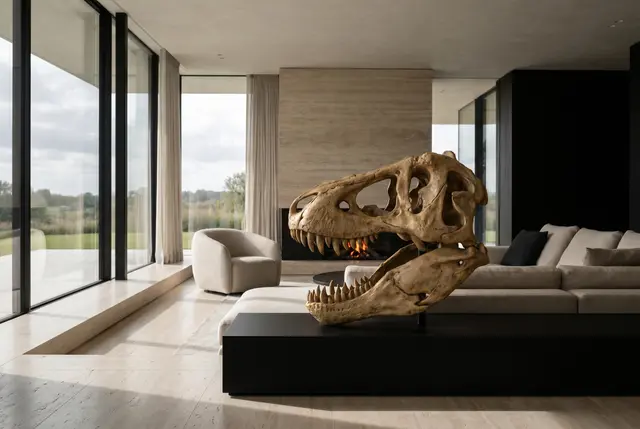
The bone belongs to science. The form can belong to you. A cast carries the exact anatomy of the real animal — the same skull, the same scale — without the vault, the guilt, or the eight-figure price.
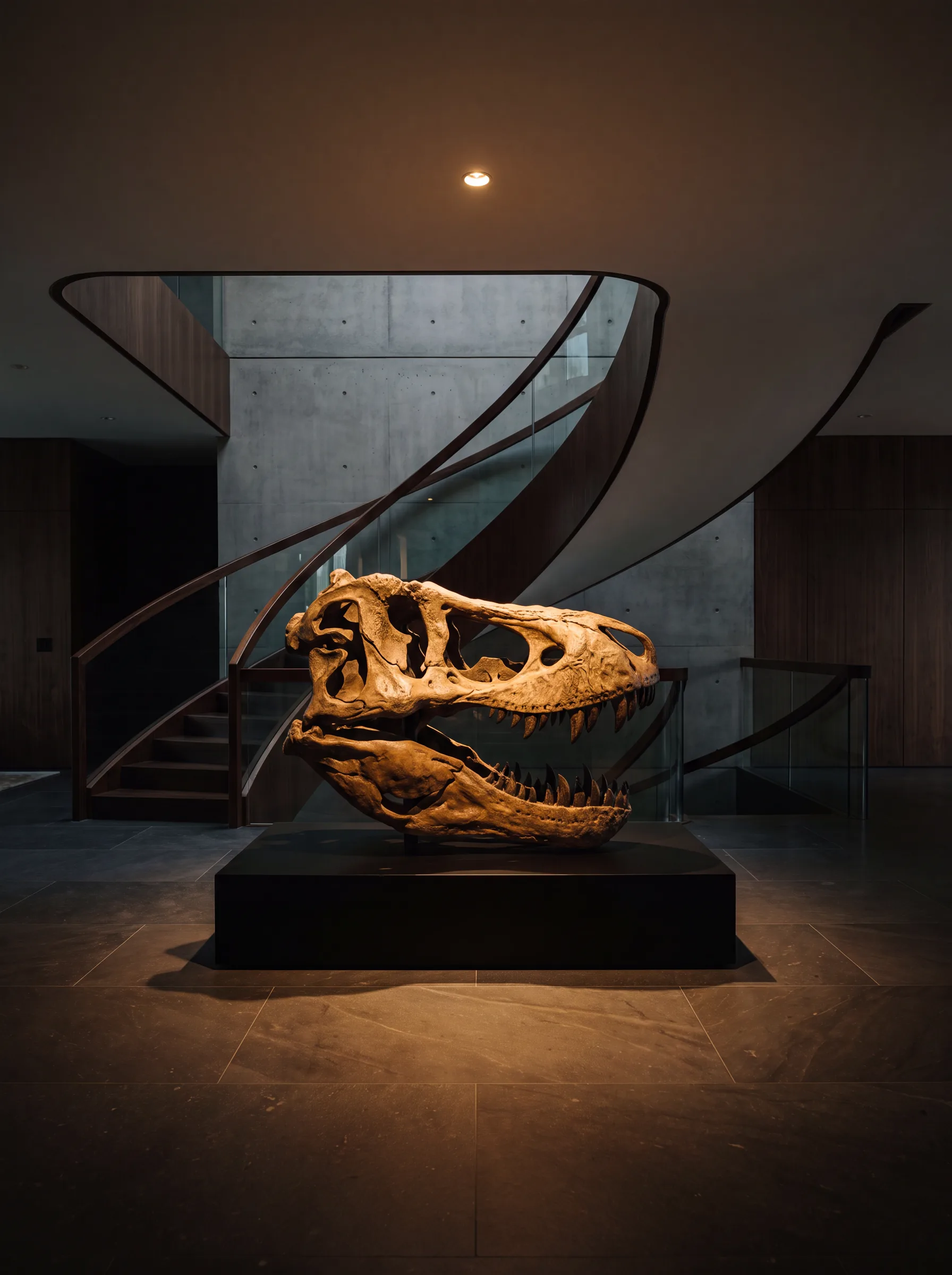
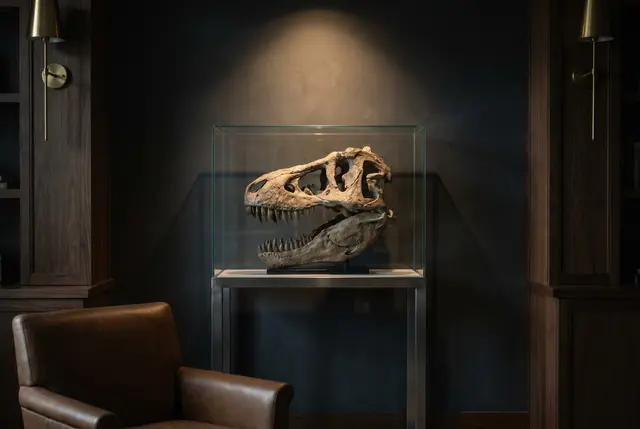
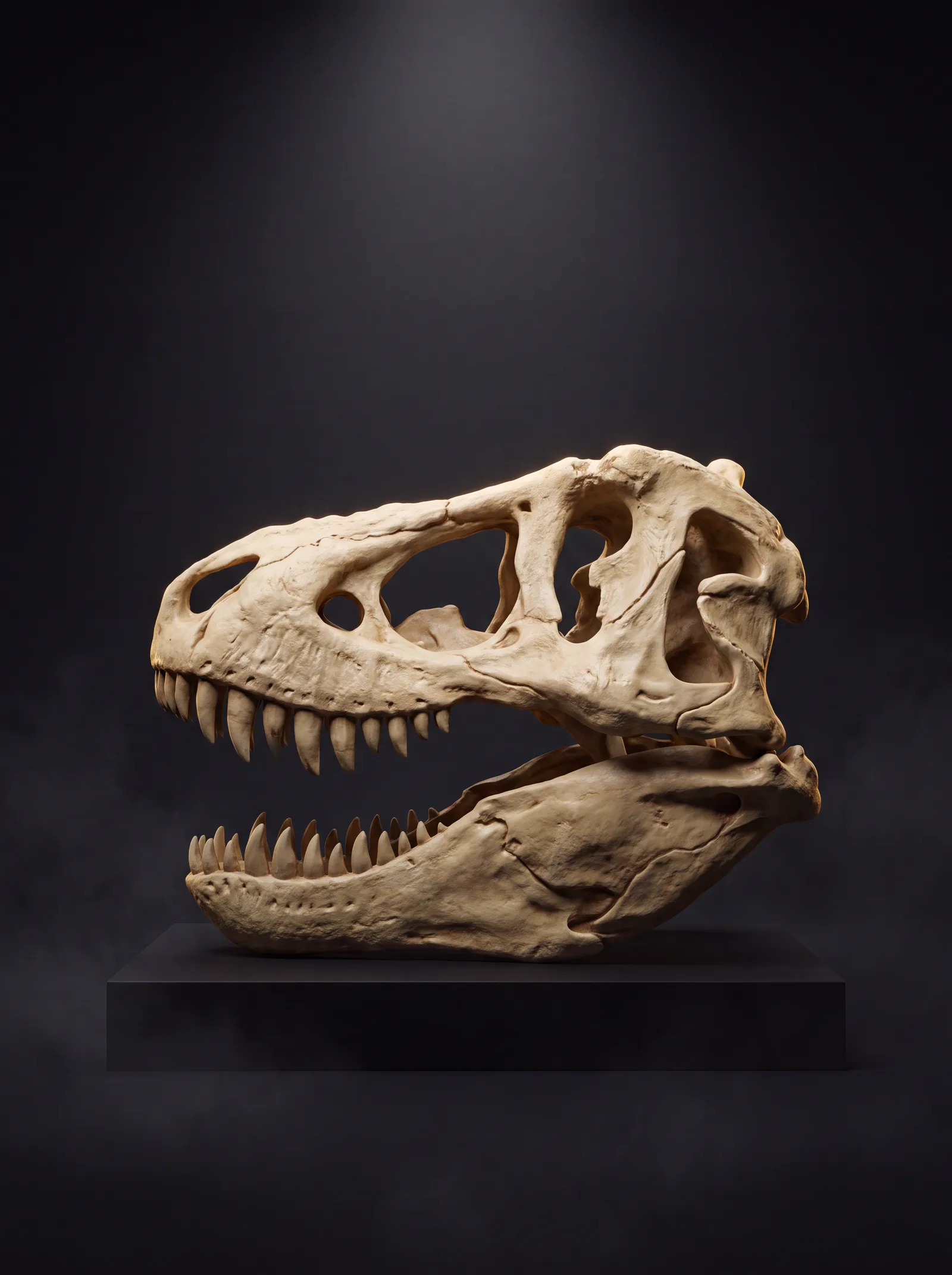
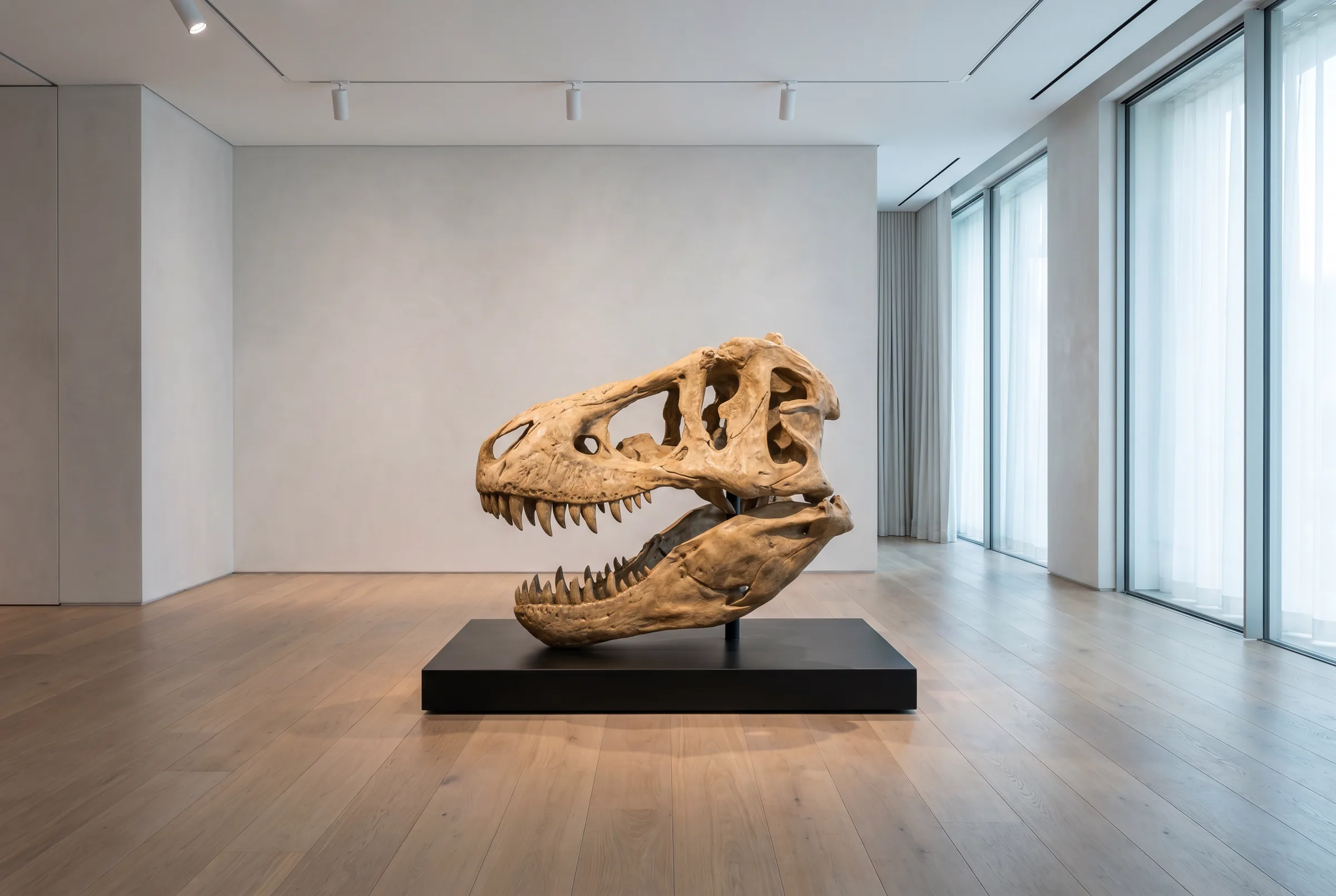
Each work is presented on a designed pedestal, vitrine, or plinth — chosen for the specimen and the room, lit to a single dramatic source. The display is part of the commission, not an afterthought: it is what separates an installed OSSA work from a crated cast.
Every specimen carries its story in four acts — the animal, its death and finding, its raising in the atelier, and its keeper. This is the shape of the dossier that ships with the work.
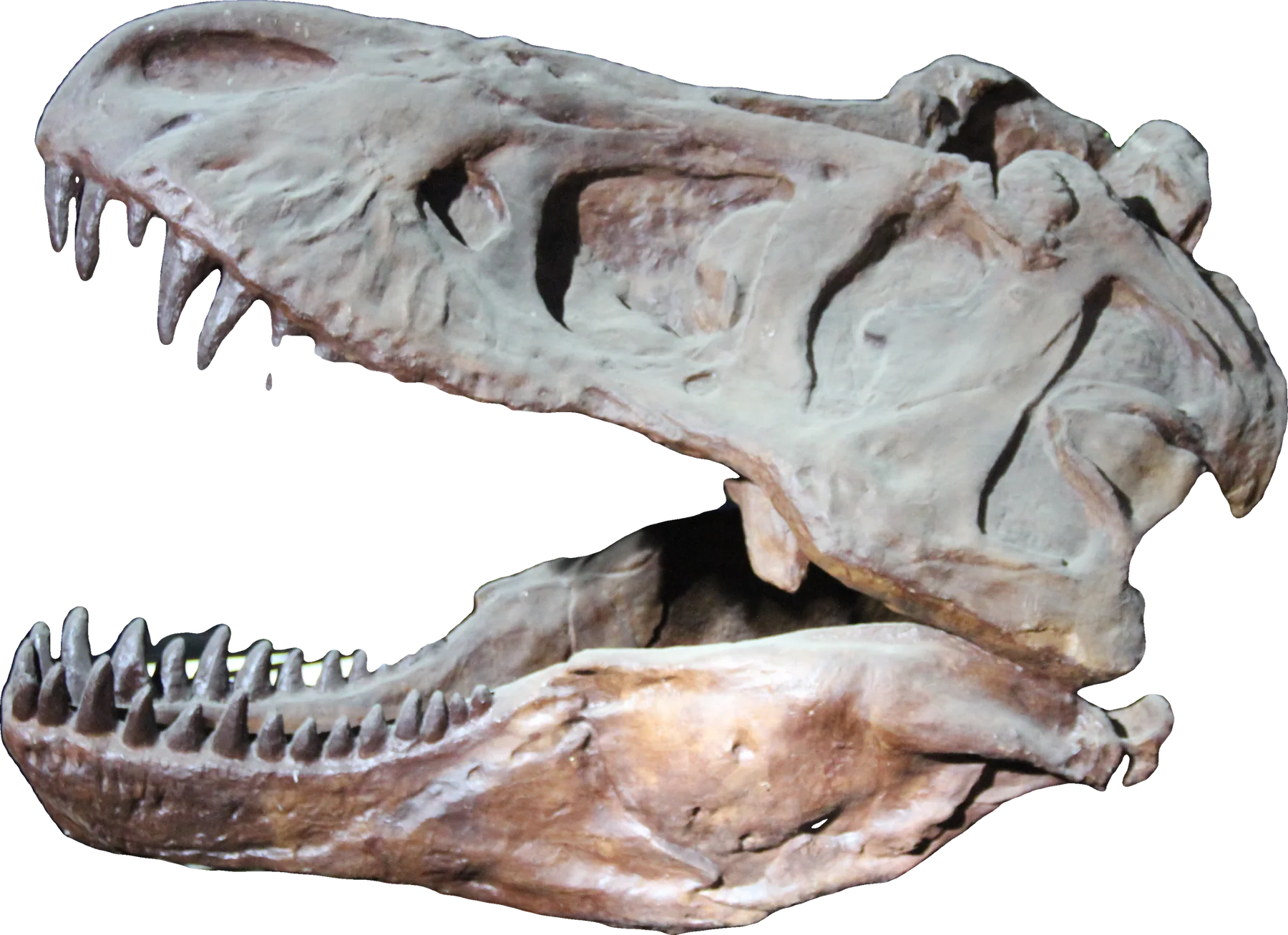
The most complete predator the fossil record has surrendered — a Late Cretaceous tyrant, dead some 66 million years, the skull alone the length of a man.
The provenance of the source specimen: its formation, its locality, the institution that holds the original. Cited by catalogue number — never implied as your own.
Cast to the millimetre, hand-finished in the OSSA bone patina over documented hours, mounted, and set on its chosen pedestal under a single light.
A blank page, signed in ink at installation. Your name, your number in the Register — the moment the work passes into your custody.
Send one photograph of the wall or corner you would consider. We render the specimen, life-size, in your actual space — at no cost and no obligation. You see it in the room before anything is made.
The species, the form, and the pedestal, vitrine, or plinth it is presented on — walnut or blackened steel, floor or wall. We hold your number in the edition while you decide.
The work is cast, hand-finished, and mounted over the commission period, documented as it goes. A commission begins on deposit; the balance is due before installation.
Delivered and placed white-glove in your space, its dossier signed into your keeping and its number recorded — permanently — in the OSSA Register.
Commissions above threshold are held in third-party escrow — funds released only after you have inspected the installed work.
A cast, never a fossil. Renders are visualizations, never photographs of an install. Anatomy verified against published osteology.
Caps are permanent and public. When an edition closes, it is closed — the Register is never reopened.
The first render is a courtesy — no cost, no commitment. It is simply the fastest way to know whether a room was waiting for one unforgettable object.
Begin a commission →Editioned natural-history sculpture · a cast, never a fossil · renders are visualizations, never photographs of an install.