OSSA
Bringing the collection into the light…
Bringing the collection into the light…
A predator built around the math of the kill.
 Cast preview
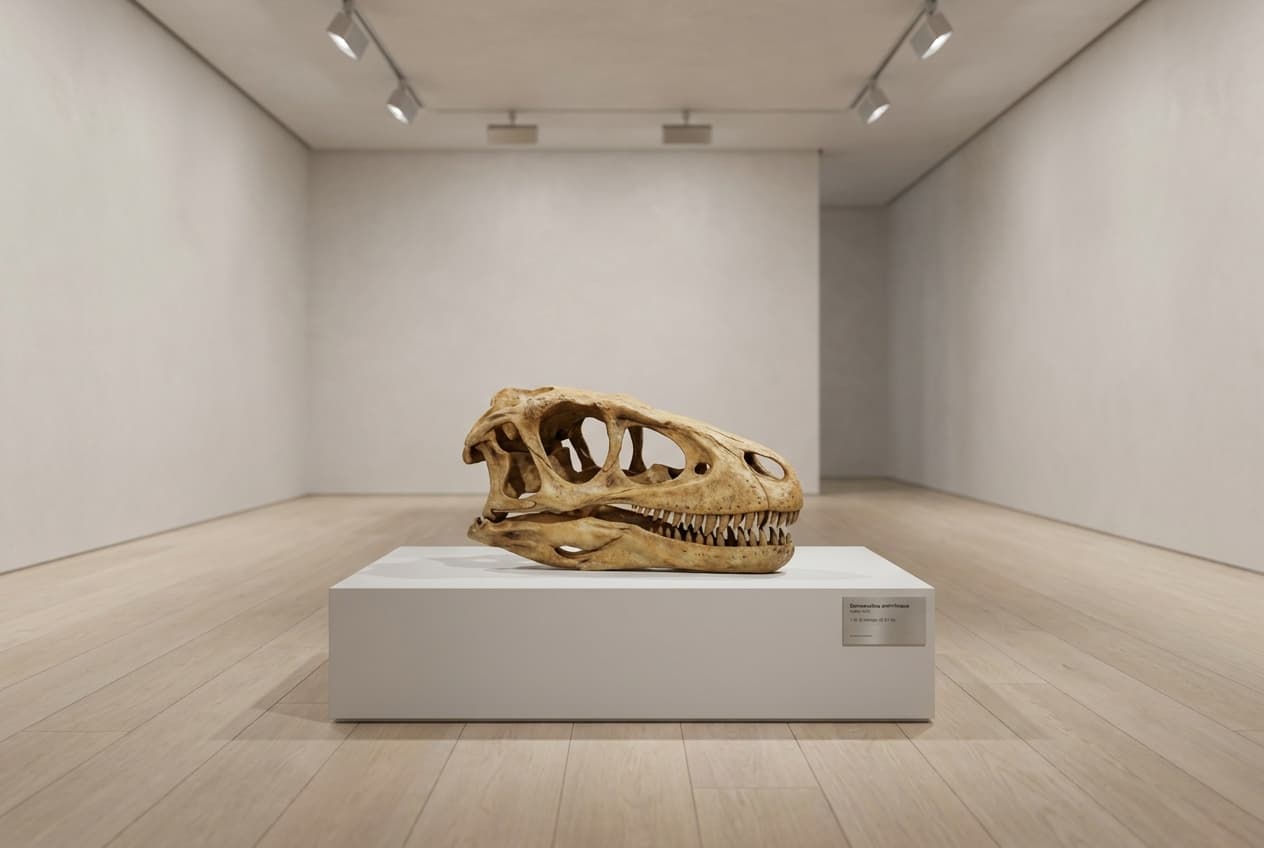
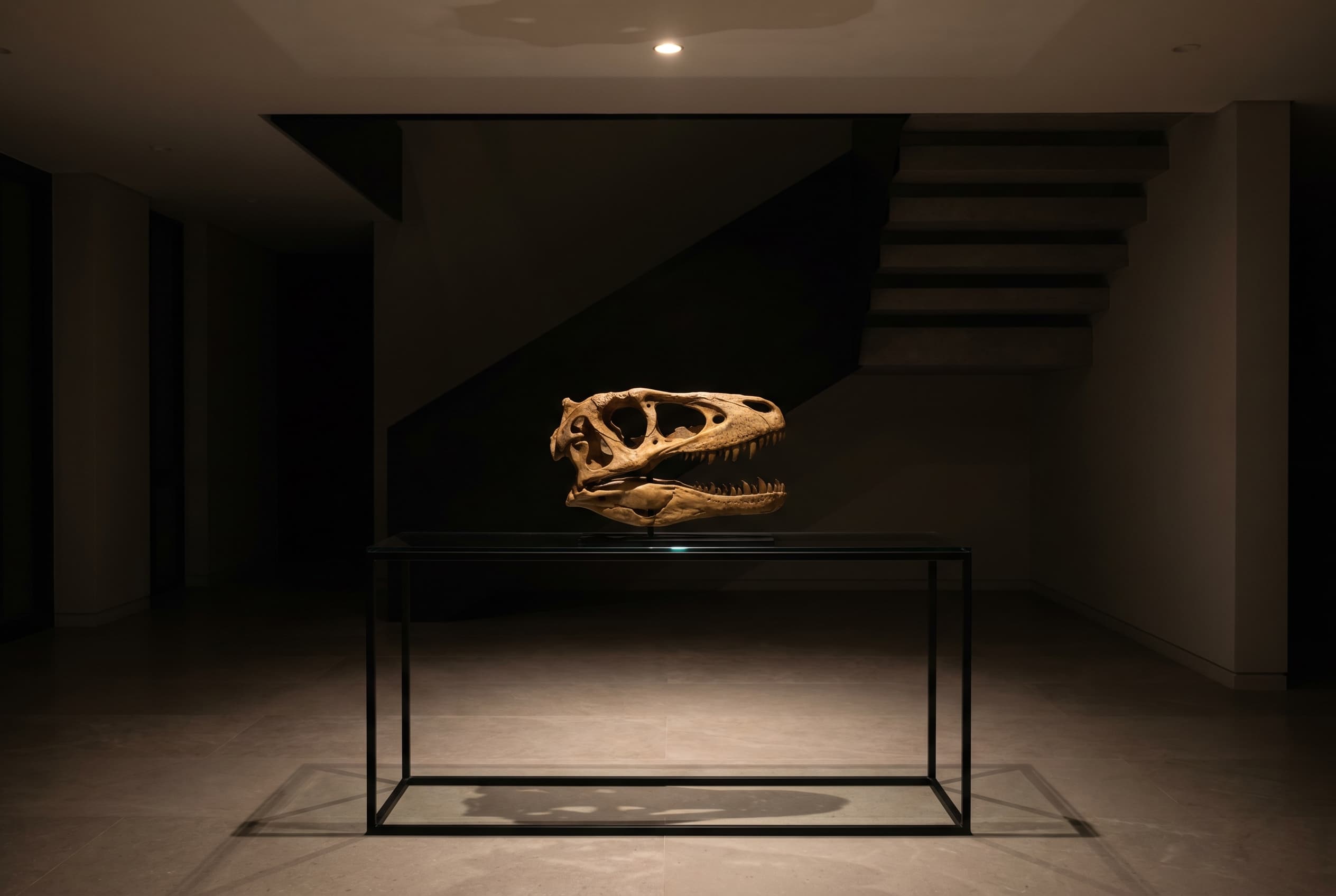
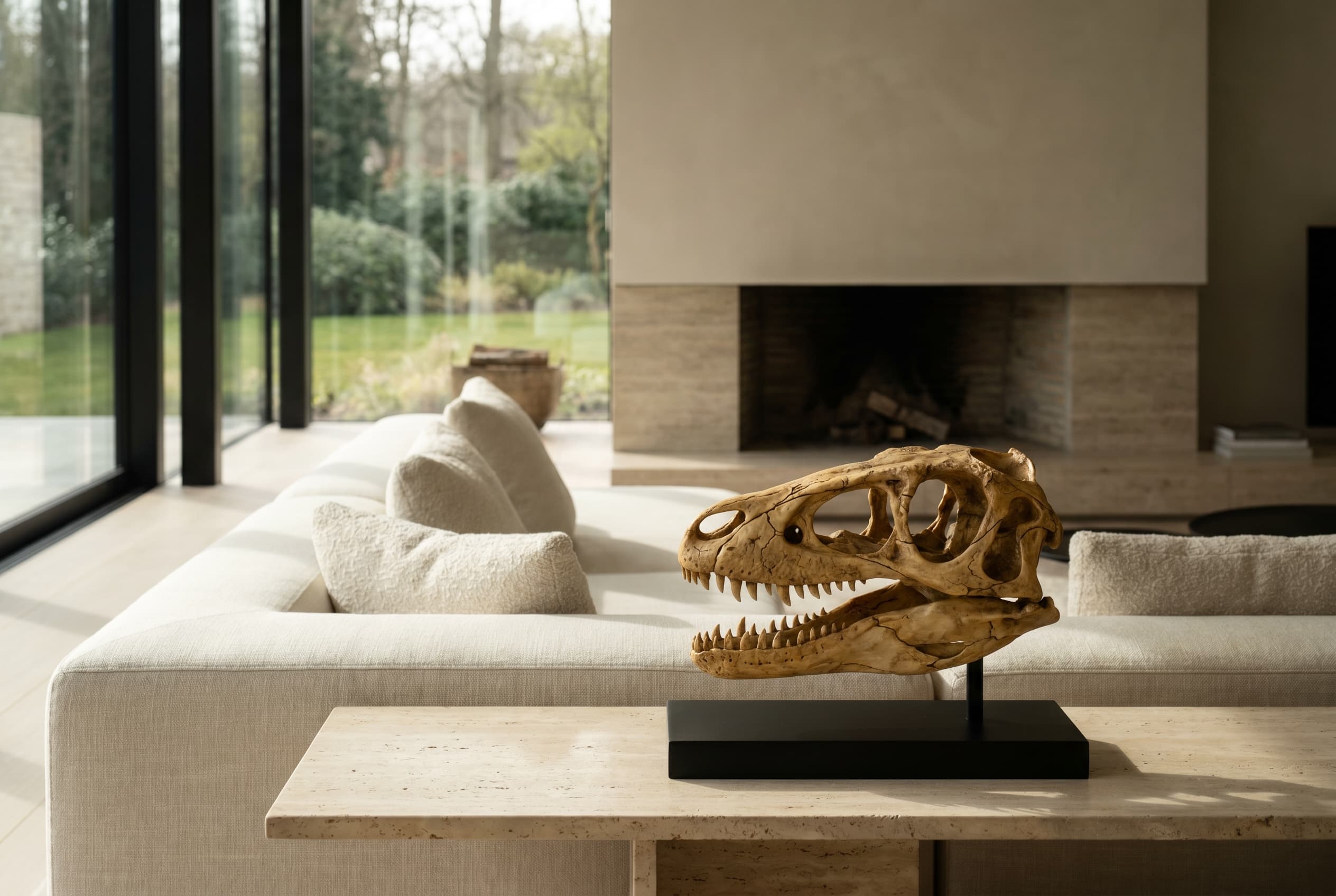
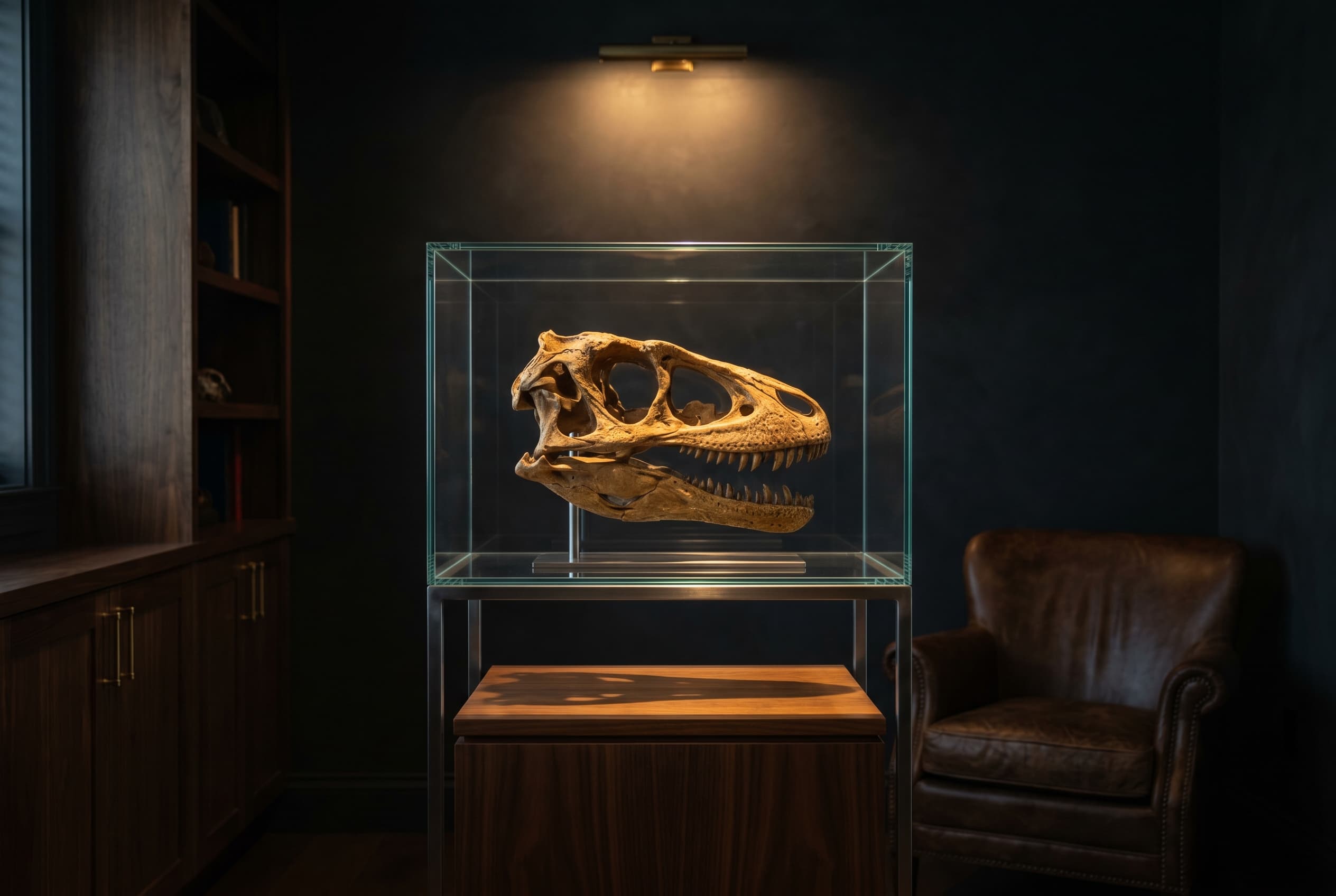
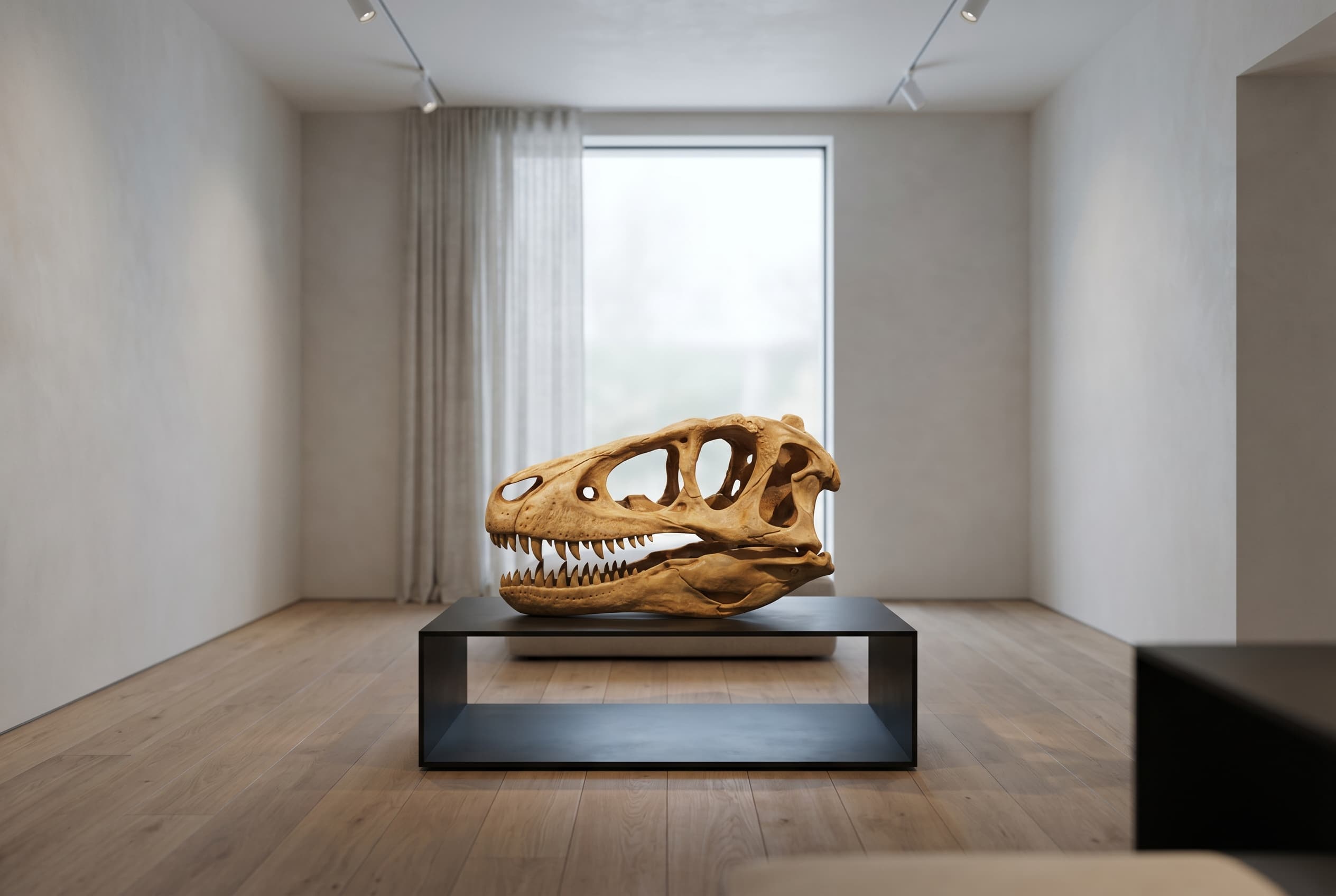
This cast reconstructs the skull of one of the most agile hunters of the Early Cretaceous, a narrow, lightly built head lined with recurved, blade-edged teeth angled for gripping struggling prey. At roughly sixteen inches long, it reads as taut and purposeful on a plinth, the large eye sockets and forward-set orbits hinting at the acute vision that helped reframe how the science understood these animals.
Each tooth and suture is hand-finished and toned to echo the surface of the original material, so the piece holds its detail under close inspection as readily as it commands a room from across one.
Deinonychus antirrhopus is the animal whose study by John Ostrom, beginning with material recovered in 1964, helped reframe dinosaurs as active, bird-like creatures and supported their evolutionary link to birds.
Its serrated, backward-curving teeth were suited to slicing flesh from prey held with strongly clawed hands and feet.
The genus name means terrible claw, a reference to the enlarged sickle claw carried on each hind foot rather than to the jaws.
Visualisations — staged renders, not photographs. Drop your own room to preview a commission in place.
Begin a commission. Tell us where it will live, and we’ll take it from there — quote, cast, deliver, install, and light it in place.