OSSA
Bringing the collection into the light…
Bringing the collection into the light…
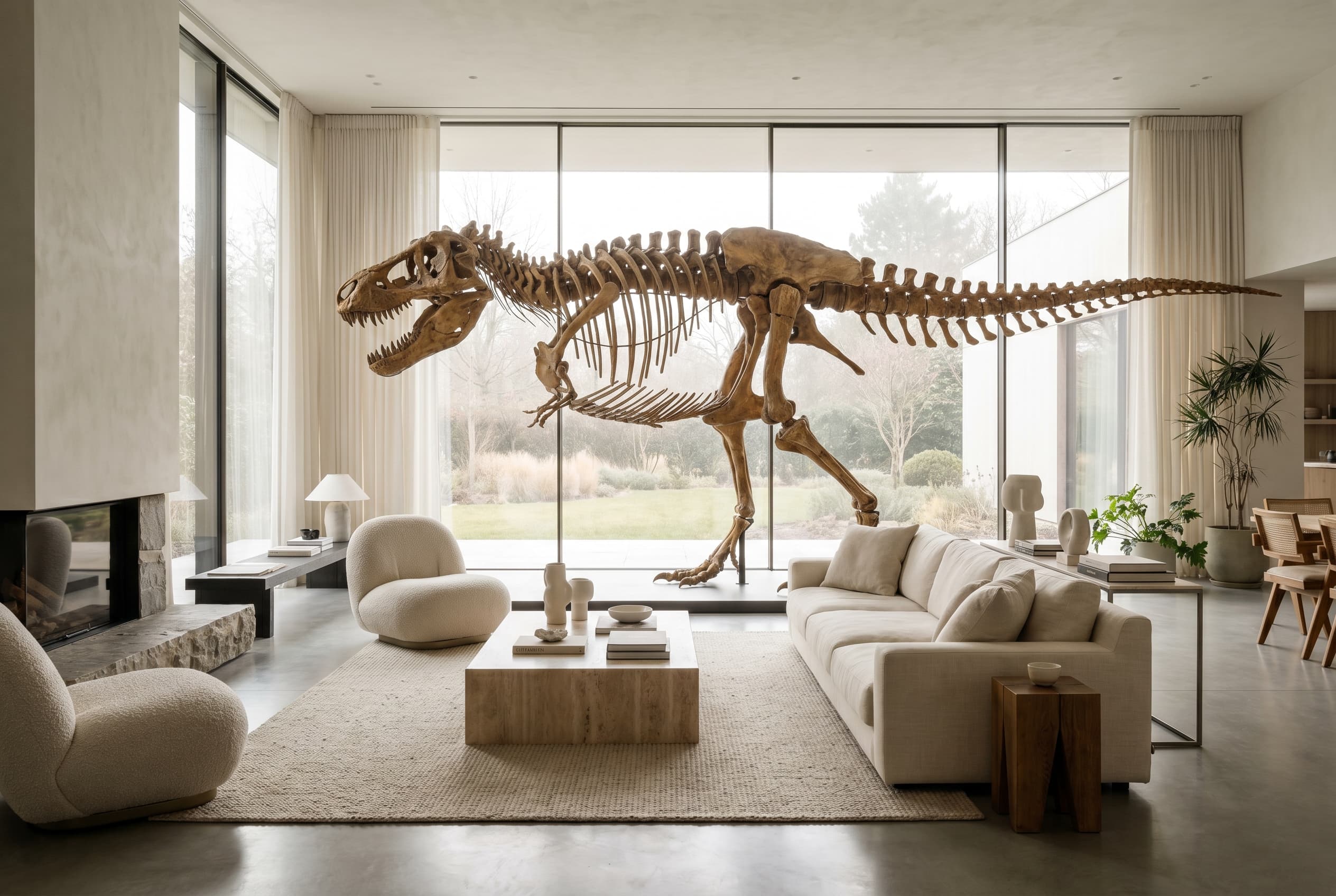
Forty feet of the Late Cretaceous, in full stride.
 Cast preview
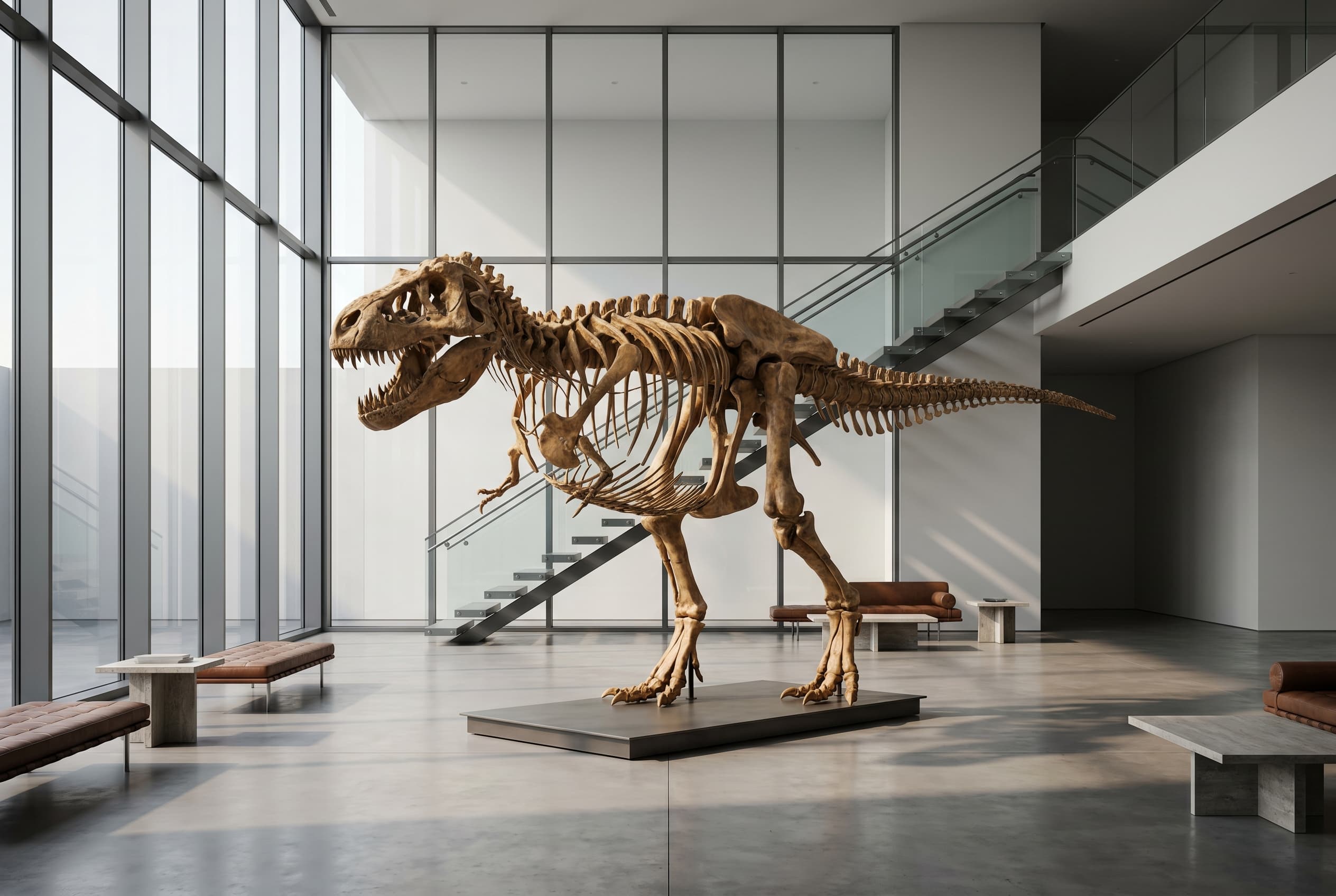
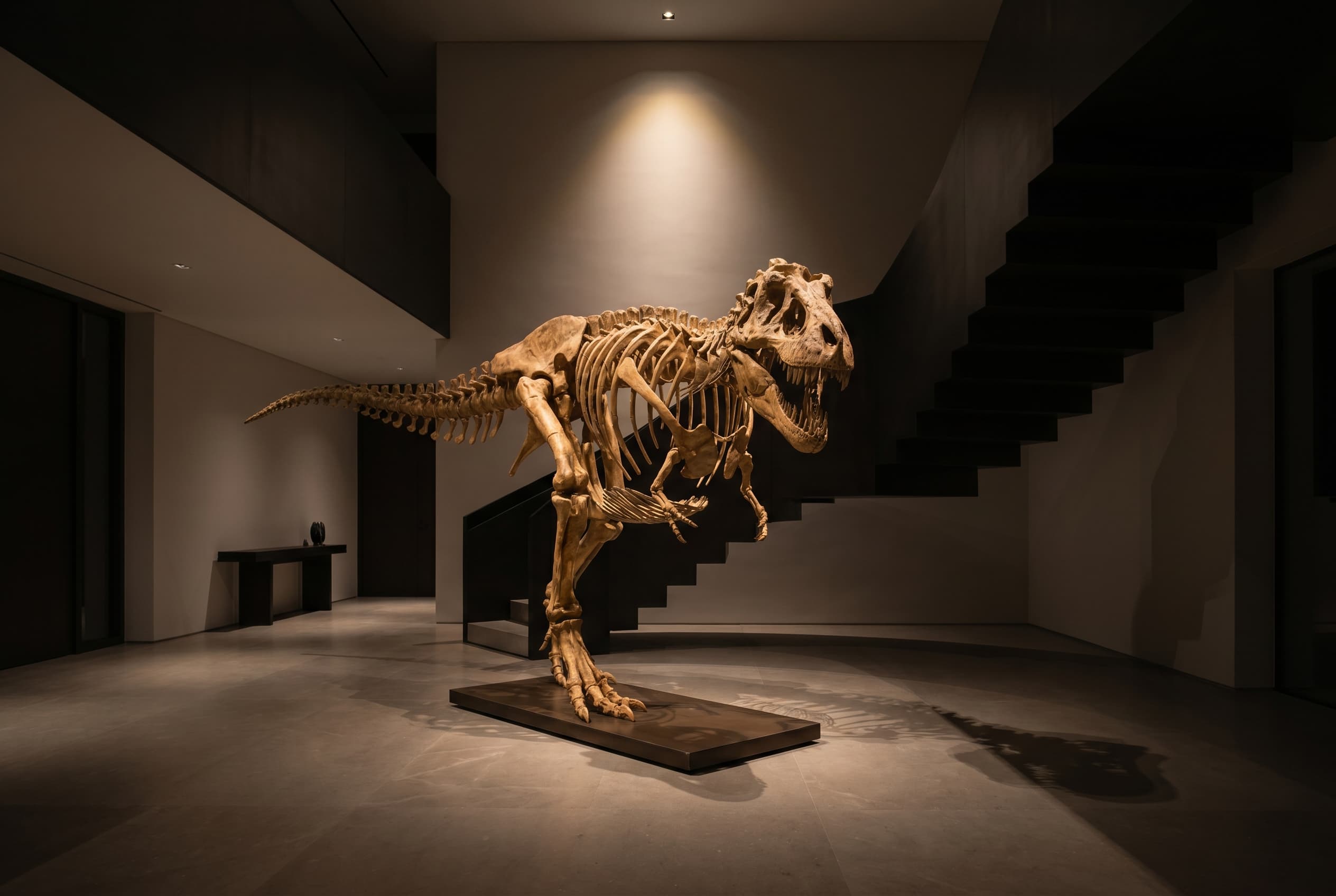
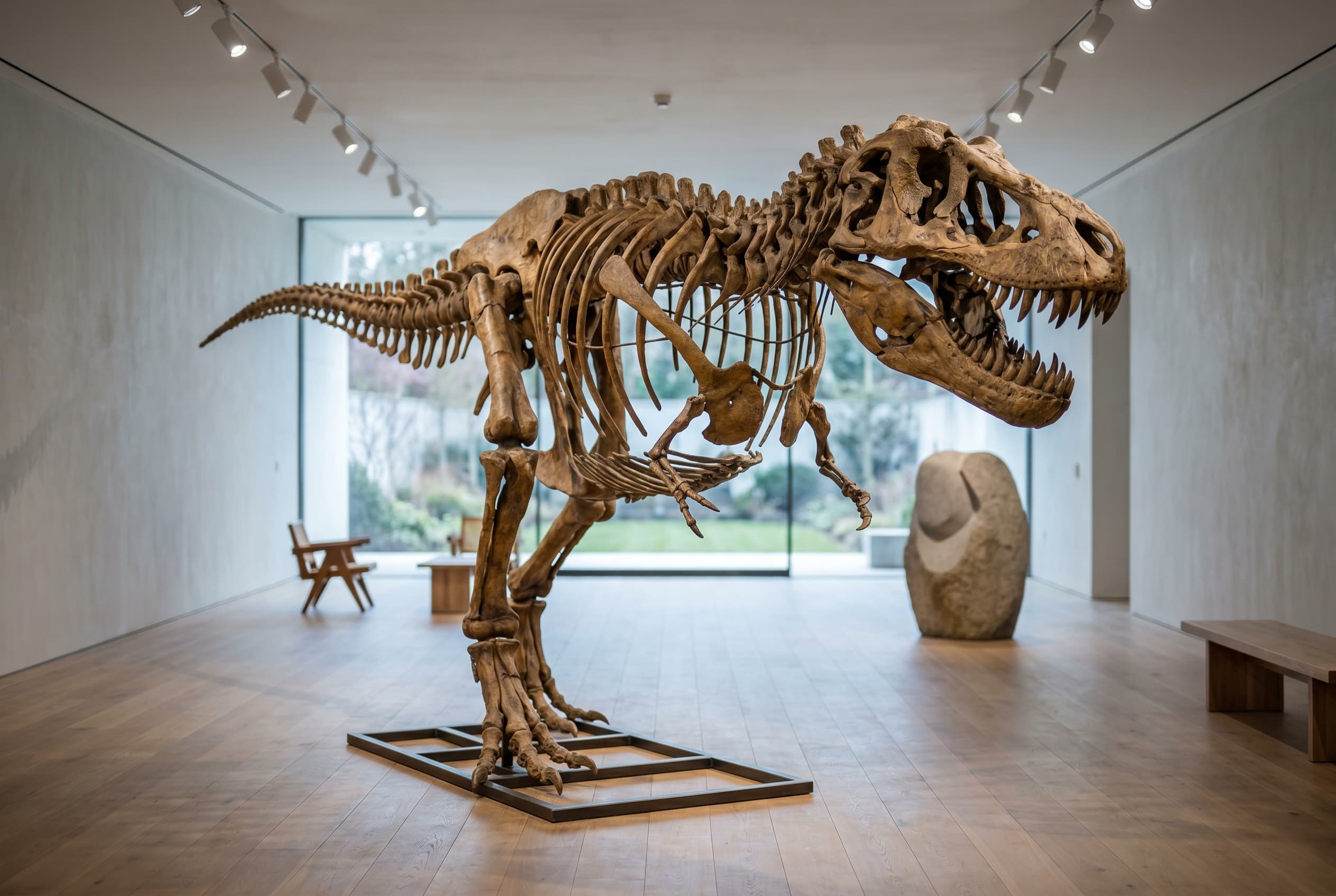
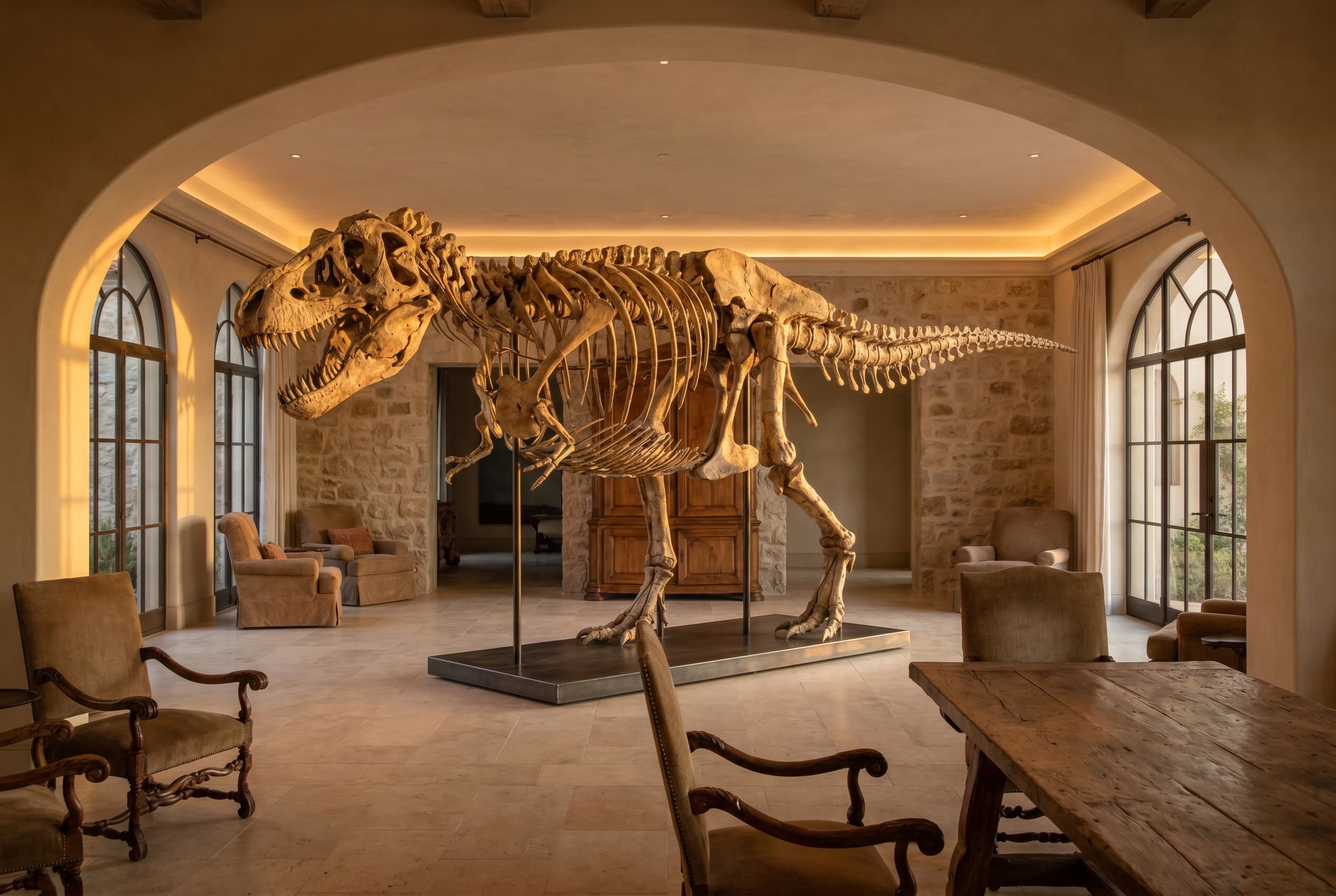
A complete, life-size skeletal cast posed in a low, balanced stance, the long tail counterweighting the great head much as the living animal is thought to have carried itself. From the curved ribcage to the reduced two-fingered forelimbs and the powerful hind limbs, the mount captures the proportions of one of the defining predators of its age, holding any room large enough for its forty-foot span.
The bones are cast individually and assembled on a discreet armature, then hand-toned across hundreds of elements so that no two surfaces read identically, in the manner of a museum gallery mount.
Tyrannosaurus rex lived at the very close of the Cretaceous, roughly 68 to 66 million years ago, in what is now western North America.
Large adults reached around forty feet in length and an estimated six to nine tonnes, placing it among the largest land predators known.
The species was named in 1905 by Henry Fairfield Osborn, the name meaning tyrant lizard king.
Hell Creek Formation · Montana & the Dakotas · Maastrichtian, ~68–66 million years ago
A mounted Tyrannosaurus runs some forty feet from snout to tail tip and stands roughly twelve at the hip — an animal that has to be walked around rather than looked at. Fewer than fifty reasonably complete individuals have ever been recovered from the Hell Creek badlands, which is why the few that reach the market do so at figures that make headlines: $8.36 million for Stan in 2020, $50.1 million for the tyrannosaur sold at Sotheby's in July 2026. Every one of those went to an institution or a vault. The cast is the only version of this animal that can be commissioned, delivered, and lived with.
Visualisations — staged renders, not photographs. Drop your own room to preview a commission in place.
Begin a commission. Tell us where it will live, and we’ll take it from there — quote, cast, deliver, install, and light it in place.