OSSA
Bringing the collection into the light…
Bringing the collection into the light…
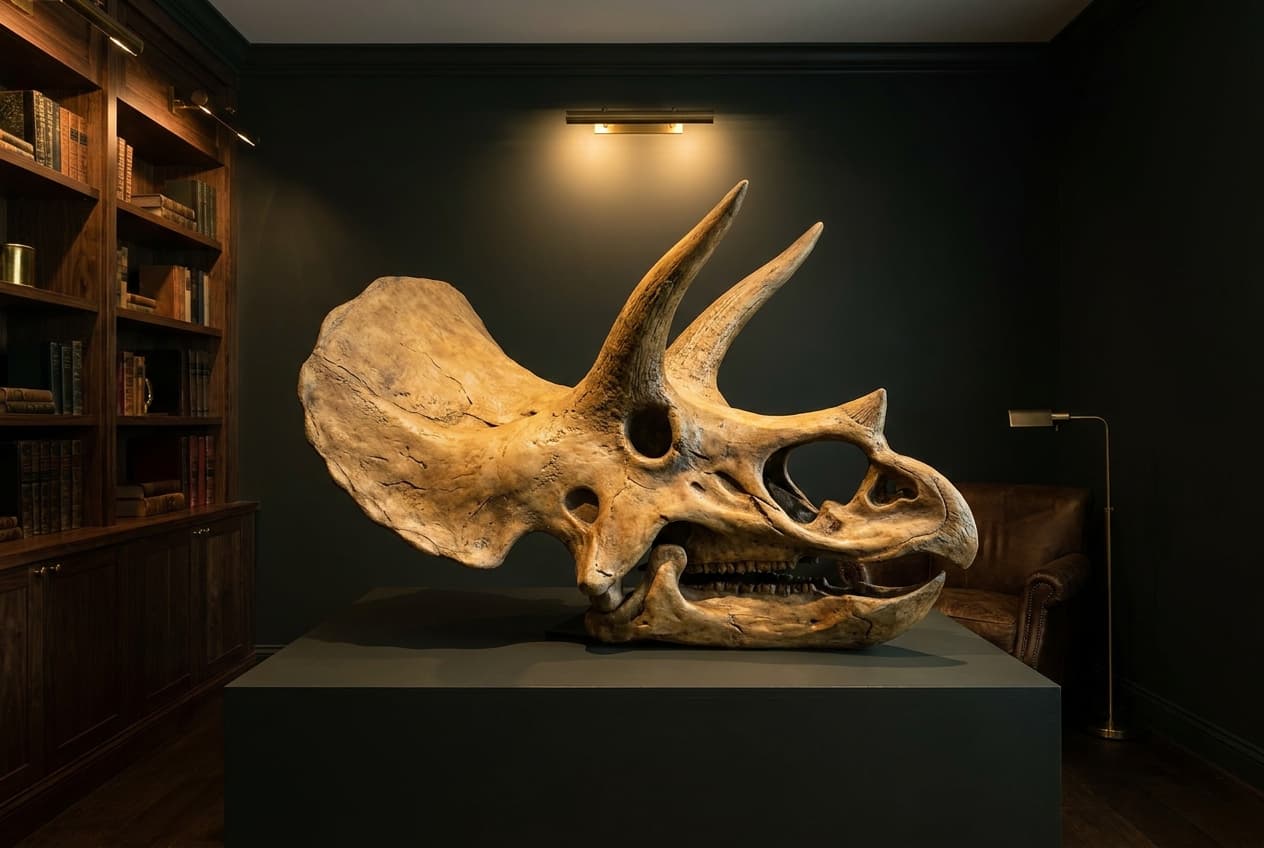
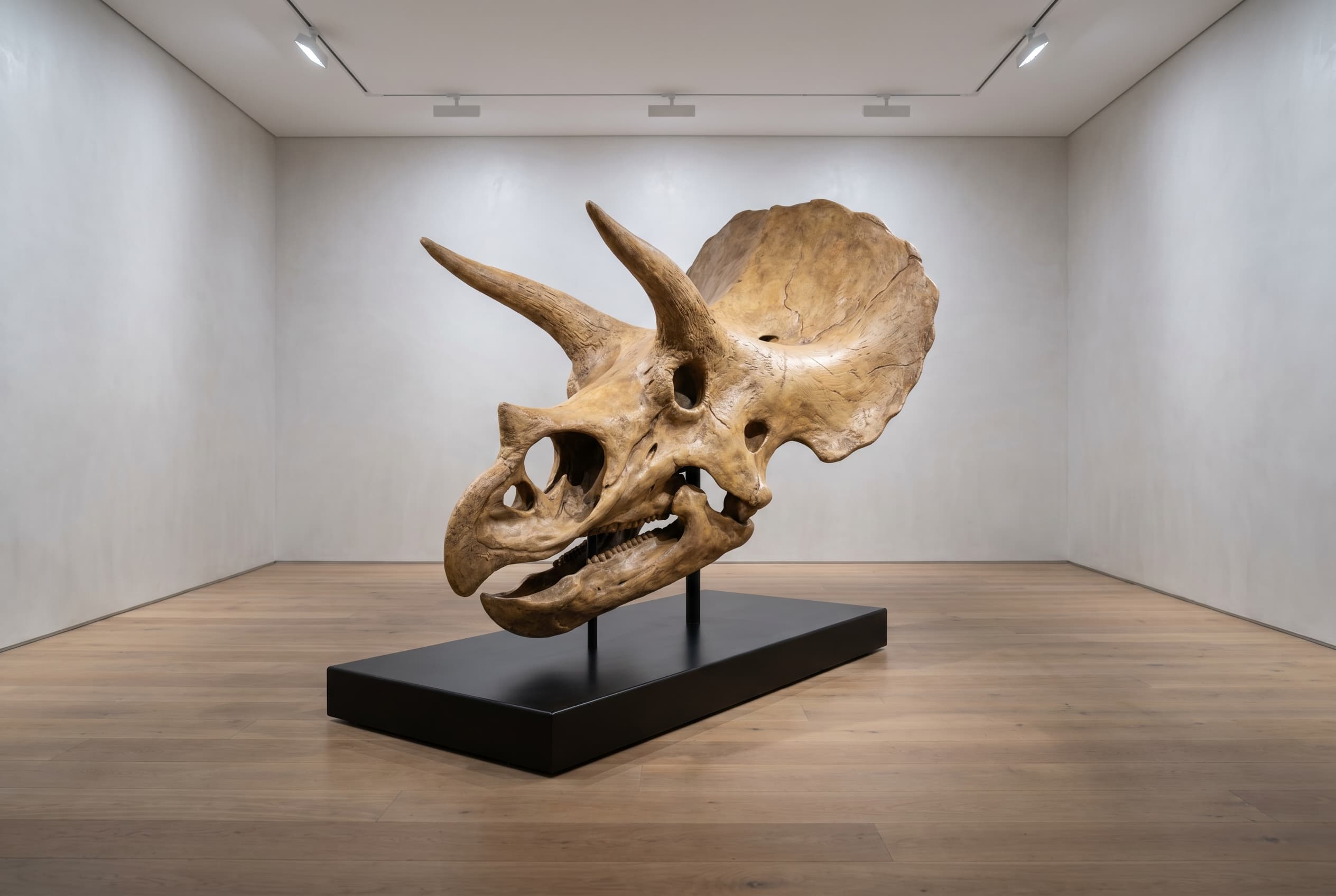
Three horns and a crown of bone, at full scale.
 Cast preview
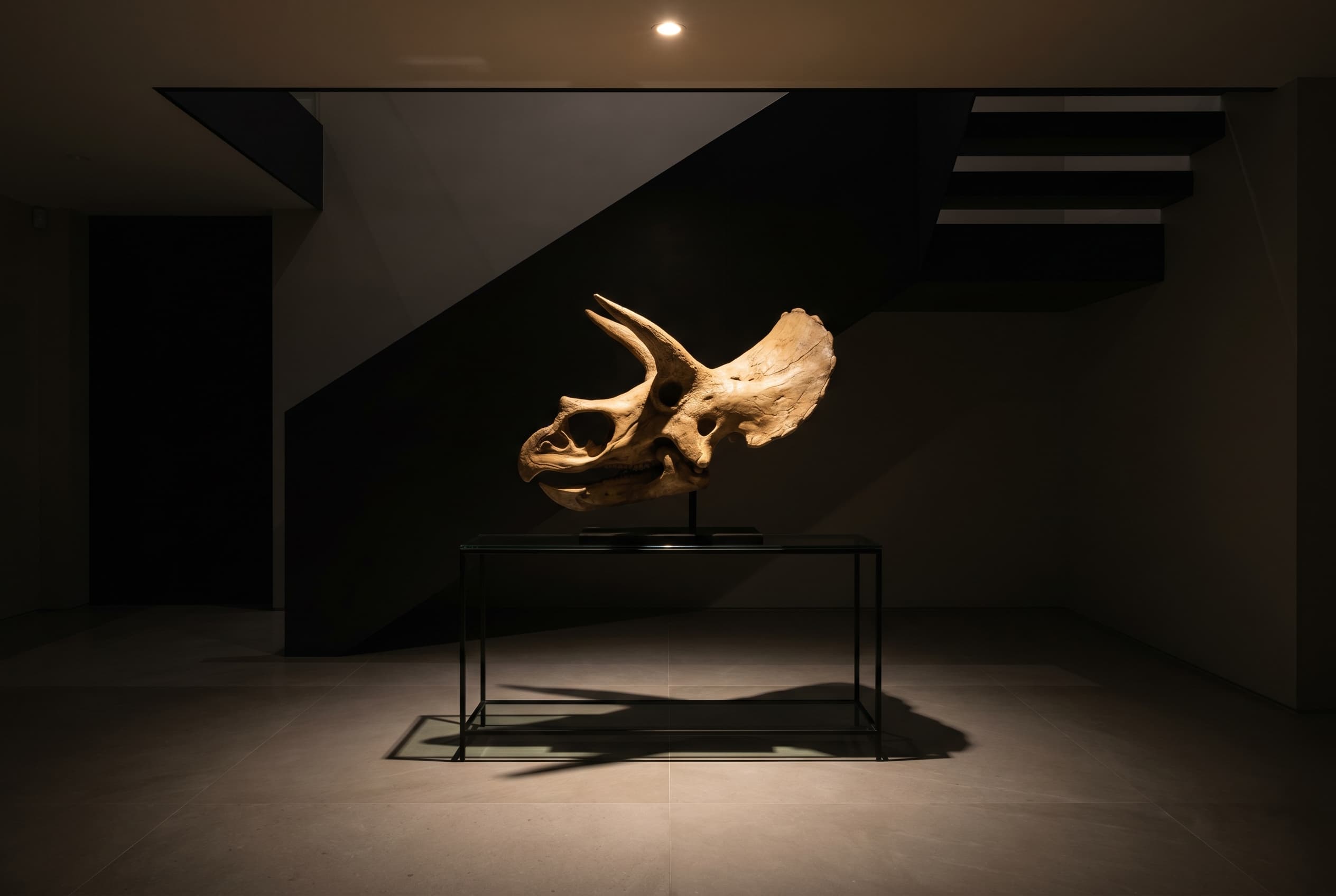
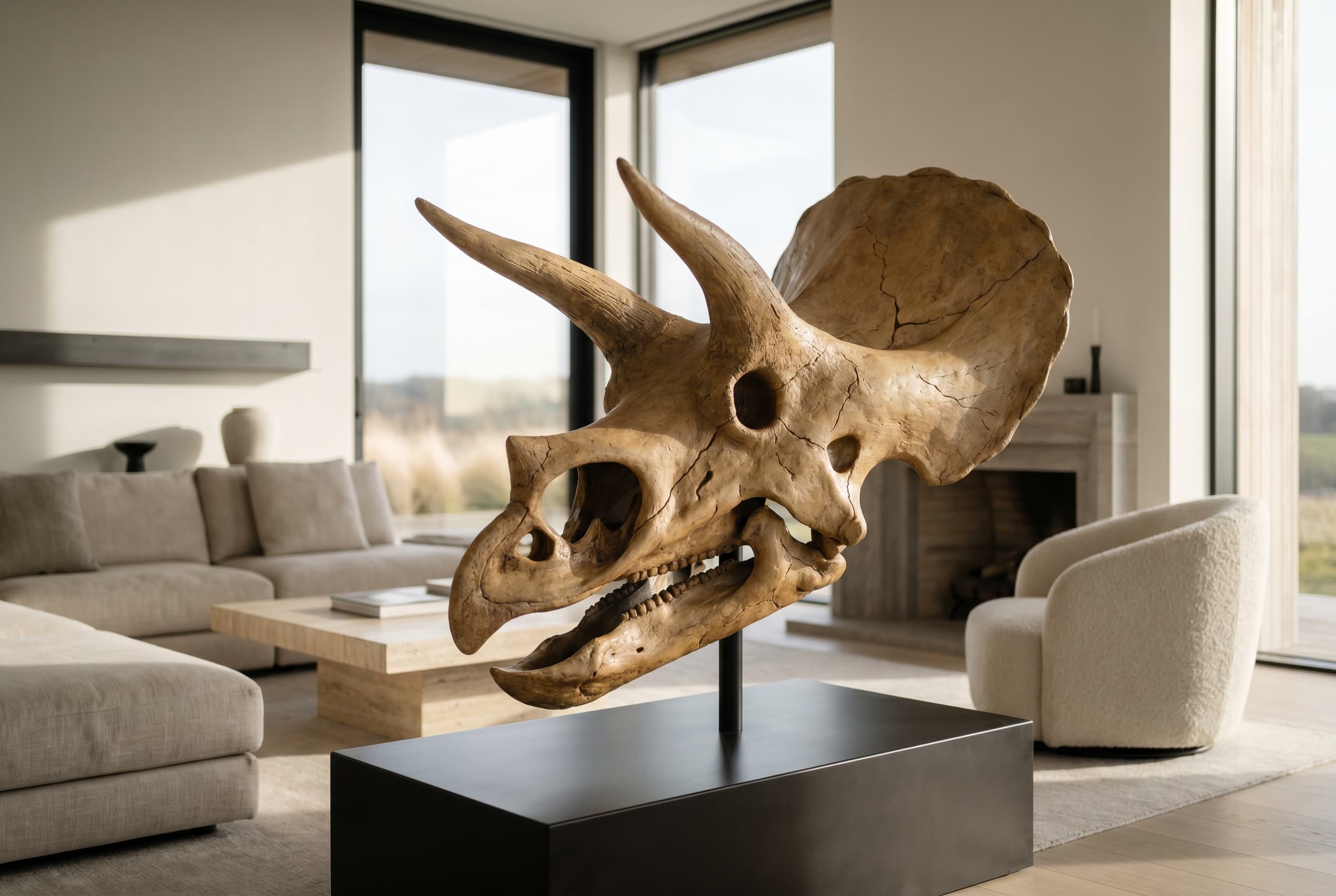
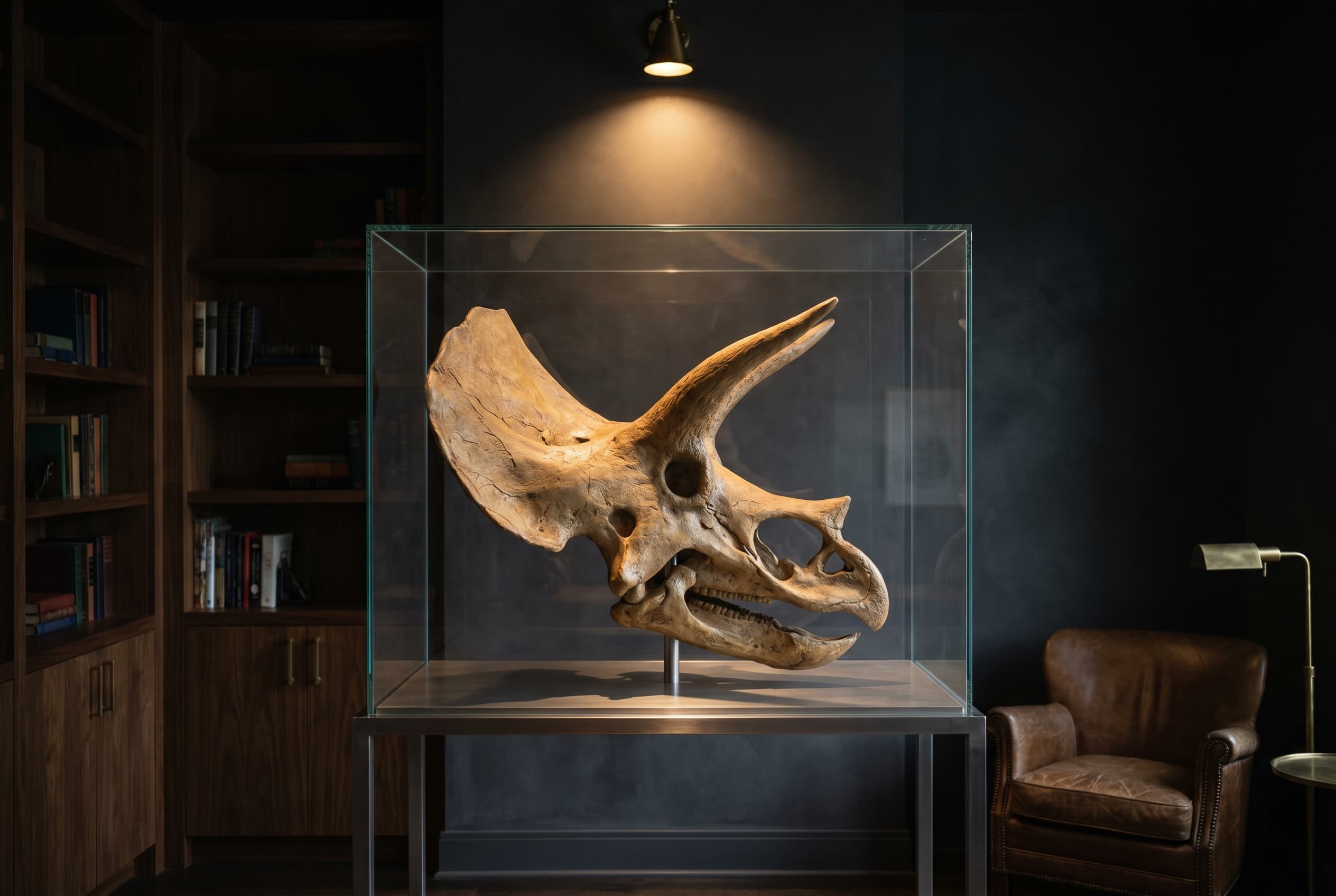
A faithful cast of the great horned skull, some seven feet of beaked jaw, brow horns, and the broad parietal frill that fans above the eyes. Mounted at eye level it confronts the viewer with the architecture of a herbivore built to stand its ground, every suture and horn core reproduced from the original.
Each cast is hand-finished and toned to read as weathered bone, so the frill catches light across its sweep and the surface carries the depth of the specimen it was drawn from.
The skull of Triceratops is among the largest of any known land animal, approaching a third of the animal's total length.
Its paired brow horns could exceed three feet in length and are thought to have served in contests with rivals and in defence against predators.
Healed punctures matching the tooth spacing of Tyrannosaurus have been found on Triceratops frills, evidence of encounters the herbivore sometimes survived.
Hell Creek & Lance Formations · Montana, Wyoming, the Dakotas · Maastrichtian, ~68–66 million years ago
Triceratops horridus shared the Hell Creek floodplains with Tyrannosaurus and vanished in the same extinction. Othniel Charles Marsh named it in 1889 — from horn cores he first mistook for an unusually large bison. The skull is the reason it is famous: with the frill, it reaches some seven feet, among the largest skulls ever carried by a land animal, and it is grown, not worn — solid bone, fused, with the brow horns often bearing the scars of fights with its own kind. A genuine Triceratops skull brought $661,500 at Sotheby's. The cast is how that silhouette enters a private room.
Visualisations — staged renders, not photographs. Drop your own room to preview a commission in place.
Begin a commission. Tell us where it will live, and we’ll take it from there — quote, cast, deliver, install, and light it in place.